

VAT Refunds, Explained Simply
The quiet discount hiding inside every European price tag — and how smart travelers use it to save hundreds on luxury purchases.
What is VAT, and why is it in the price?
A tax hidden inside the price tag
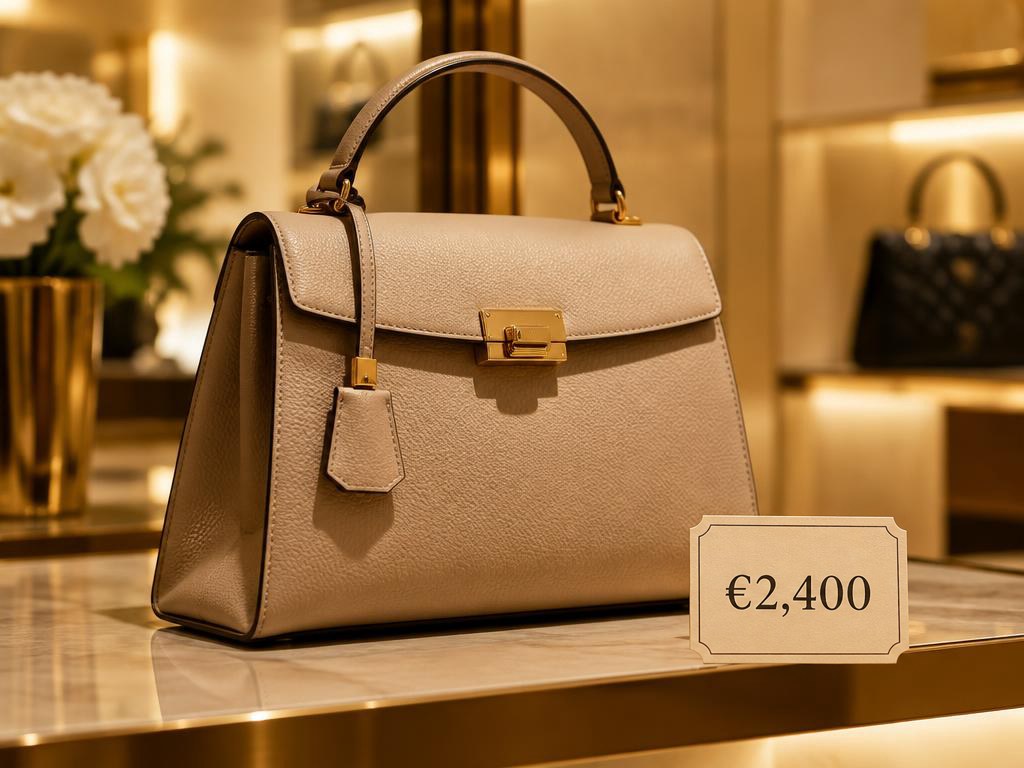
Value-added tax — VAT — is a consumption tax built into the sticker price of almost everything sold in Europe, Japan, Korea, Singapore and much of the world. Unlike US sales tax, which is added at the register, VAT is already included in the number on the tag. When a handbag shows €2,400 in Paris, that price quietly contains €400 of French VAT at 20%.
Rates vary by country
France charges 20%, Italy 22%, Germany 19%, Japan 10%, Korea 10% and Singapore 9%. Hong Kong is the famous exception — it levies no VAT or sales tax at all, which is one reason it remains a magnet for luxury shoppers.
Why visitors can reclaim it
Because VAT is a tax on domestic consumption, most countries agree that visitors who take their purchases home shouldn't have to pay it. That simple idea is the foundation of every tourist refund scheme.
Why do countries give tourists their tax back?
Tax-free shopping makes a destination more competitive for high spenders.
Hotels, dining and experiences are still fully taxed.
Boutiques use tax-free pricing to win tourist sales.
It isn't generosity — it's strategy
Luxury shopping is a powerful driver of tourism. A traveler deciding between Paris and another destination will notice that a €3,000 purchase in France effectively costs several hundred euros less after the refund.
Why the economics work
The tourist still spends money on hotels, restaurants and experiences — all fully taxed — while the refunded VAT applies only to goods that leave the country. Governments treat the refund as the cost of attracting a valuable visitor, and retailers treat it as a marketing tool.
Schemes can change
The United Kingdom abolished its tourist VAT refund in January 2021 after Brexit, which is why London no longer offers tax-free shopping to visitors — a shift that pushed many luxury shoppers toward Paris and Milan instead.
How a VAT refund actually works
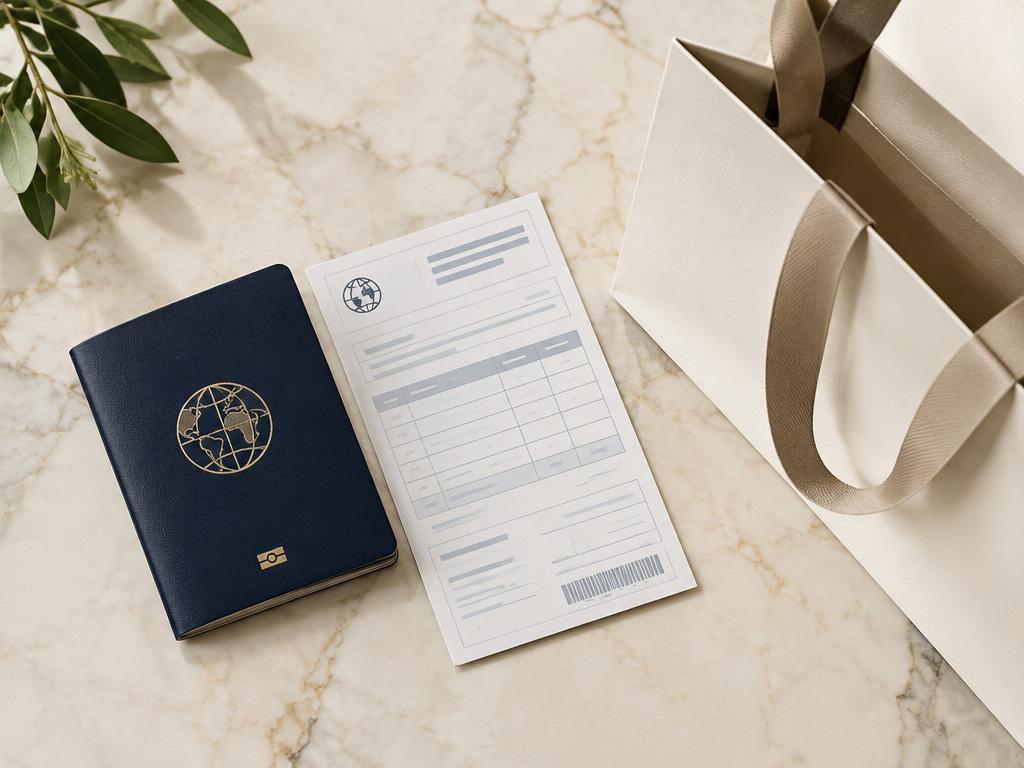
- Shop at a participating store. Bring your passport. Upon checkout, ask for a tax-free form — the sales associate fills in your details and the purchase amount. Most countries require a minimum spend per store, per day (about €100 in France, €70 in Italy, €50 in Germany).
- Keep everything together. The receipt, the tax-free form, and the unused goods themselves. Customs officers can ask to see the item, so don't pack it in checked luggage before your stamp.
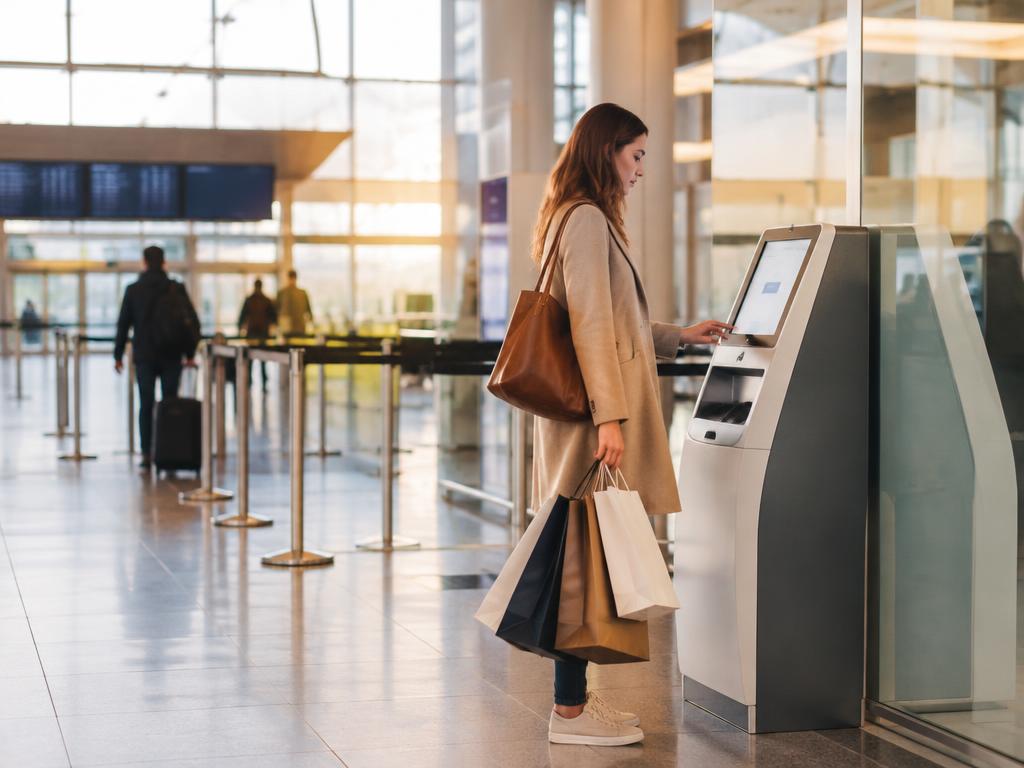
- Get customs validation when you leave. At the airport or border, present your forms at the customs desk or an electronic kiosk (like France's PABLO machines) before you depart. For EU purchases, this happens at your final EU exit point, not each country.
- Collect your refund. Refund operators such as Global Blue or Planet process the payment to your credit card or in cash at the airport, minus their commission. Card refunds typically arrive within a few weeks.
Some countries skip the paperwork
Japan offers instant tax exemption at registered stores — you simply pay the tax-free price at the till. Korea offers instant refunds on smaller purchases and airport refunds above the cap.
What is a VAT refund really worth?
The headline rate isn't what you get back
Refund operators keep a commission — often 35–45% of the VAT portion. On a €2,000 purchase in France, the VAT inside the price is about €333, but the net refund to your card is typically around 12–13% of the purchase price: roughly €250. Real money, but not the full 20%.
Price gaps and exchange rates matter too
The refund is only one part of the equation. Luxury houses price the same item differently by region, and exchange rates move constantly. A bag that is cheaper in Milan than at home can become cheaper still after the refund — or the gap can vanish once you add your home state's sales tax and any import duty above your personal allowance (US residents, for example, have an $800 duty-free exemption).
That's exactly what the WanderWorth Savings Calculator models for you: the regional sticker price, the net VAT refund after operator fees, live exchange rates, and your local sales tax — so you see the true final price in each country before you book a flight.
VAT refund schemes at a glance
| Country | VAT rate | Min. spend | How you get it |
|---|---|---|---|
| France | 20% | €100.01 | Global Blue refund at airport, paid to card |
| Italy | 22% | €70.01 | Global Blue refund at airport, paid to card |
| Germany | 19% | €50.01 | Customs stamp at EU exit, then operator refund |
| United Kingdom | 20% | — | No tourist refund — scheme abolished in 2021 |
| Japan | 10% | ¥5,500 | Instant tax exemption at registered stores |
| Hong Kong | 0% | — | No VAT at all — the sticker price is final |
| Singapore | 9% | S$100 | eTRS electronic refund at Changi Airport |
| South Korea | 10% | ₩15,000 | Instant in-store refund, airport refund above cap |
Rates and thresholds are best-effort figures and change over time — always confirm current rules with the retailer or refund operator before you travel.
Getting the most from tax-free shopping
- Consolidate your purchases. Minimum spends apply per store, per day — one larger purchase at a single boutique beats several small ones scattered across shops.
- Choose the card refund over cash. Cash refunds at the airport are instant but usually carry a lower rate or an extra fee. Card refunds are worth the wait.
- Arrive at the airport early. Customs validation lines can be long at peak times, and you cannot claim the refund after you depart.
- Mind your home allowance. A VAT refund abroad doesn't exempt you from import duty at home. Know your country's duty-free allowance before a big purchase.
- Compare before you fly. Regional list prices differ more than most shoppers expect. Running the numbers first tells you whether the refund makes a destination genuinely cheaper — or just looks that way.
Common questions about VAT refunds
What is a VAT refund for tourists?
A VAT refund lets non-resident visitors reclaim the value-added tax included in the price of goods they buy abroad and take home. In Europe, VAT of 19–25% is built into the sticker price, and eligible travelers can get a large share of it back when they export their purchases.
Who is eligible for a VAT refund?
Generally, visitors whose permanent home is outside the country (or, for the EU, outside the European Union) and who export the goods within a set window — usually three months from purchase. You need your passport at the till and a customs validation when you leave.
How much money do you actually get back?
Less than the headline VAT rate. Refund operators such as Global Blue or Planet keep a commission, so on a €2,000 purchase in France (20% VAT) you typically receive around 12–13% of the purchase price back — still roughly €250.
Is there a minimum spend to claim a refund?
Yes, most countries set one per store, per day. France requires about €100, Italy about €70, Germany about €50, Singapore S$100, and Japan ¥5,500. Luxury purchases usually clear these thresholds easily.
Can I get a VAT refund in the UK?
No. The United Kingdom abolished its tax-free shopping scheme for visitors in January 2021, so there is no tourist VAT refund on in-store purchases in Great Britain.
Do I have to pay tax when I bring the item home?
Possibly. Many countries charge import duty or sales tax above a personal allowance — for example, US residents have an $800 duty-free exemption. Factor your home country's rules into the true final price.
Ready to see your real savings?
Paste a product link and we'll compare the true final price — VAT refund, exchange rate and local tax included — across every supported region.